
INDUSTRY & ENGINEERING
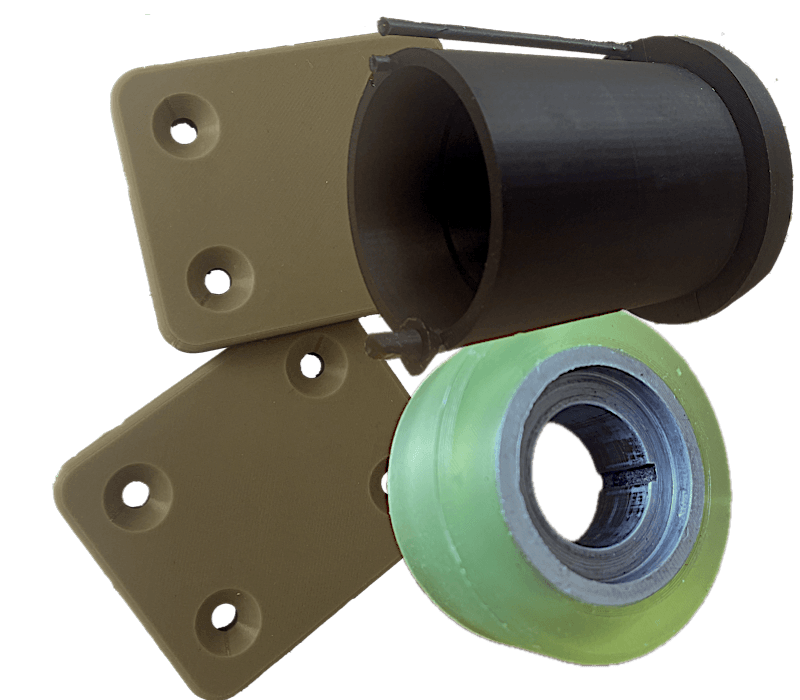
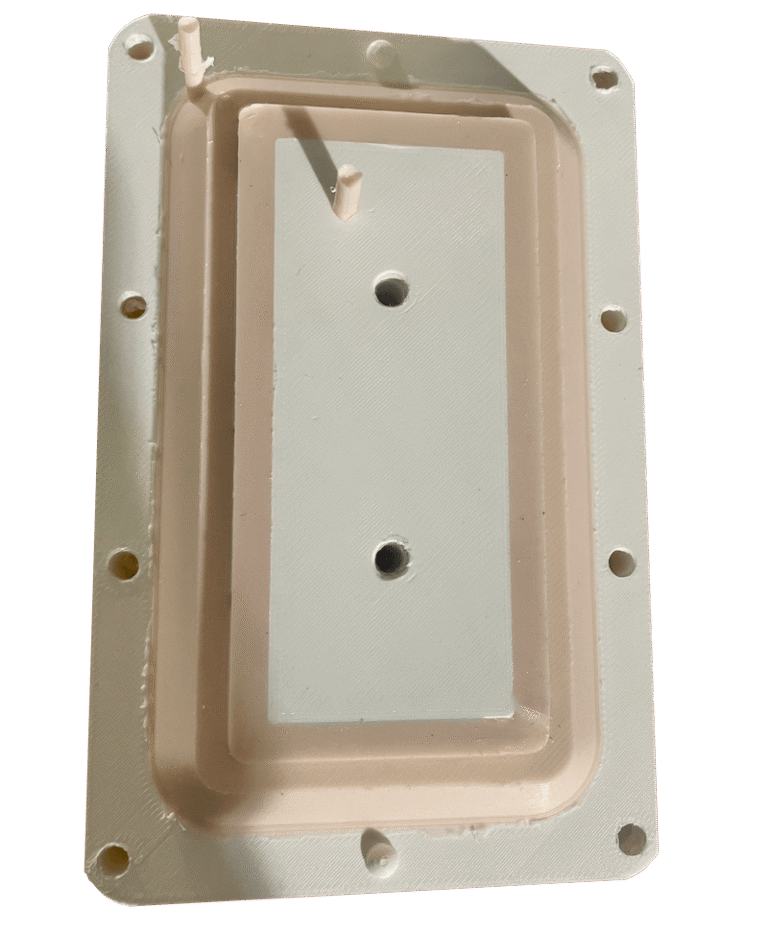
We transform your requirements into functional, ready-to-use parts
At MIRNA, we design and implement industrial solutions regardless of the phase your project is currently in. Whether you need to test a new concept or urgently resolve a production line failure, we adapt to your input:
- Do you have 3D model or drawing (.step, .stl)? Based on your digital data, we will rapidly prepare a prototype and launch low-volume production.
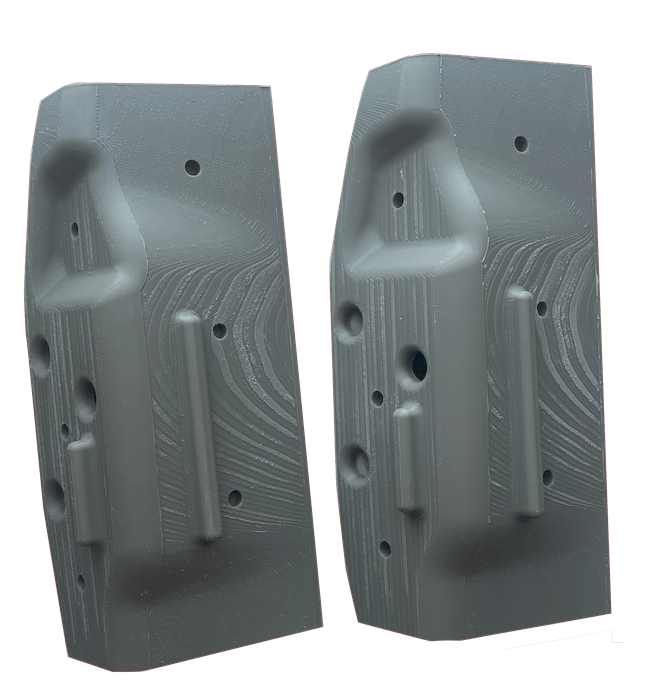
- Do you have master model (CNC or 3D printed part)? Through direct overmolding, we will manufacture a mold from it and cast 100% identical functional copies.
- Do you only have a damaged physical part without documentation?We ensure precise replication and reverse engineering of worn parts for maintenance.
We leave the limitations of conventional 3D printing and CNC machining behind. Our components are not created by applying layers or by conventional machining, but through the advanced casting of liquid polymers into flexible molds under vacuum or pressure. The result is a 100% monolithic structure with zero risk of delamination (layer splitting). The final surface texture perfectly replicates the surface of the master model – based on your requirements, we can deliver parts in a mirror-gloss, matte, or any other customized finish. We adjust material properties within a range from 10 Shore A to 87 Shore D, providing a full-fledged replacement for injection-molded thermoplastics (ABS, PP, PA, POM).
Material options and technical parameters
| Material property / Production parameter | What we can custom manufacture for you |
|---|---|
| Flexibility and mechanical hardness | We cover the complete continuous spectrum from 10 Shore A (highly elastic suction cups and soft stops), through medium-hard and semi-rigid elastomers (e.g., 40 Shore D) up to 87 Shore D (hard engineering plastics with high impact strength, replacing ABS and POM). |
| Dimensional accuracy and tolerances | We cast industrial parts in precise engineering tolerances according to the ISO 2768-mK standard, or in the exact tolerance of the supplied master part. For absolute accuracy requirements, we combine production with CNC machining of the template. |
| Environmental resistance | We adjust material properties for high resistance to friction, abrasion, industrial oils, chemicals, UV radiation, and continuous thermal load up to 250 °C. |
| Industrial certification | We supply materials meeting strict European standards and directives: 1935/2004/EC (food contact), 2002/98/EC and 2001/52/EC (contact with human skin and medical applications), 2011/65/EU (RoHS) for electronics, as well as solutions in accordance with CE, ISO 12100 and ergonomic standards. |
| Composite and multi-component casting | We combine and directly encapsulate diverse materials during the casting process – whether it is stainless steel, steel, aluminum, or even plastics with low surface energy. We manufacture monolithic components with variable hardness and integrate bearings, metal inserts, or screws. |
| Complex geometries and labyrinths | Thanks to the high flowability of the material and casting into flexible molds, we easily form internal labyrinths, cavities, and undercuts without the need for the part to be dismountable or to have technological side openings required for a CNC mill. |
Why choose polymer casting over CNC machining and injection molding?
When injection molding is economically non-viable
When CNC machining is inefficient in terms of material and time
When industrial 3D printing falls short in mechanical and surface properties
Post-processing, coloring, and coating options
Gallery of shape archetypes and applications.
Contoured nests and assembly fixtures
We manufacture assembly, screwdriving, positioning, and storage nests from flexible polyurethanes designed for handling painted, chromed, and finished parts. Our solutions provide 100% protection for decorative elements (Class-A surfaces in automotive) against scratches and damage. We also handle the design and production of low-cost molds entirely in-house.
Equipment, robotics, components
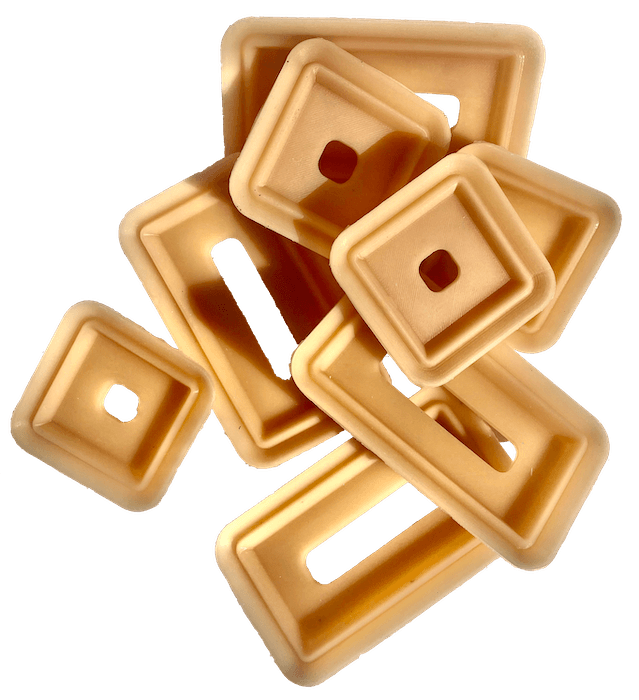
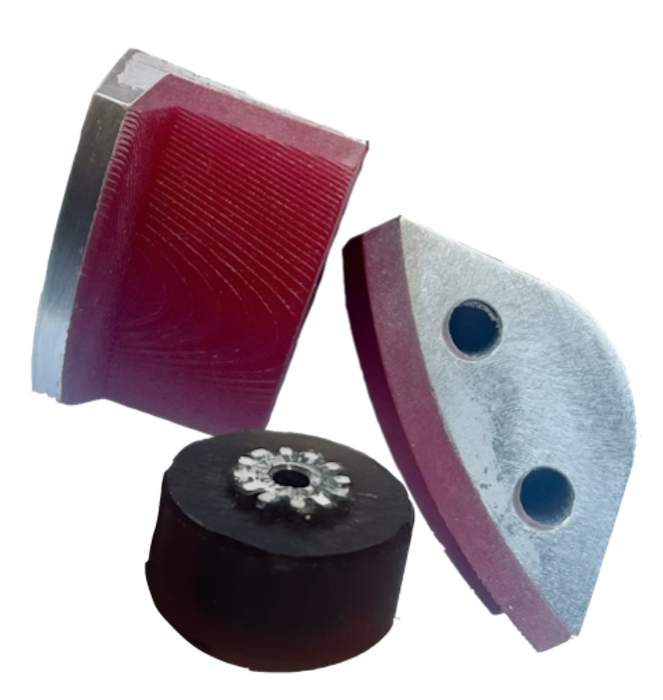
We cast various components based on supplied documentation, which are utilized in industrial equipment and single-purpose machines. We deliver custom-made contoured suction cups, stoppers, silent blocks, pulleys, and holders with high mechanical resistance. Very frequently, we handle the direct casting of soft polyurethane pads onto the metal jaws of grippers – thanks to this, they grip the handled part firmly, yet gently enough not to leave even the slightest scratch.
Composite castings and rotational components
We specialize in complex multi-component casting and the direct chemical bonding of diverse materials. We can apply and securely cast polyurethane directly onto metals or specific plastics. We encapsulate metal cores, bearings, inserts, and screws into the polymer, or cast drive teeth onto finished neoprene belts. We can also manufacture unique parts with variable hardness in different areas, massive pressure rollers, rollers with a low coefficient of abrasion, or specialized pulleys for tubing extrusion.
Sealing segments and reverse engineering
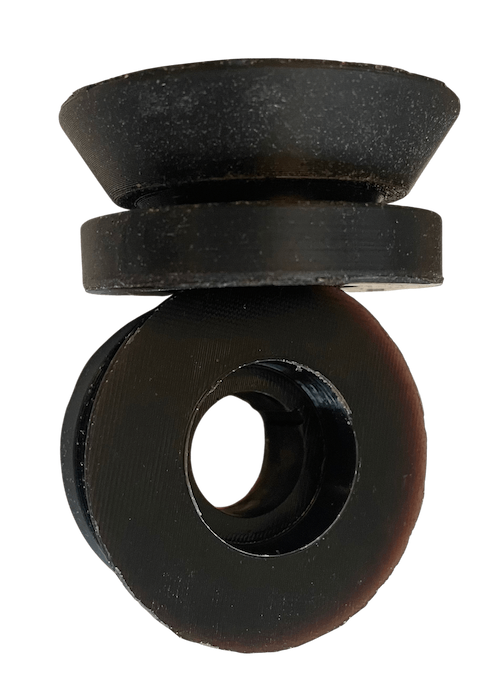
We offer rapid maintenance solutions for critical production line failures. We can precisely replicate existing polymer and elastomer industrial parts for which 3D models or drawing documentation are no longer available. We manufacture the mold through direct overmolding from the damaged part and cast the new component from high-toughness plastics (serving as a full-fledged non-metallic replacement). In addition to maintenance, we develop complex, single-piece components with internal labyrinths, as well as high-precision sealing segments for product pressure testing.

MIRNA s. r. o.
Losonec 266,
919 04 Losonec
Slovak republic
Company ID: 50731548
VAT ID: SK2120460199
Engineering insights to your inbox
Once a month, we share technical case studies from our production and tips for optimizing component costs.
Thank you!
You have successfully joined our subscriber list.